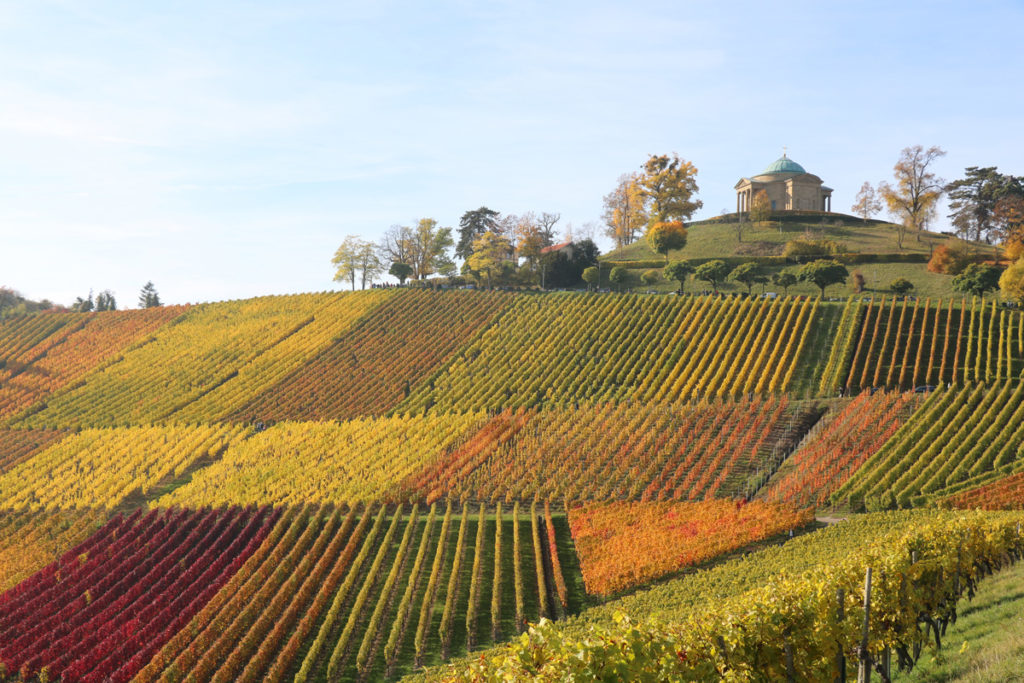
East of the centre the Neckar bends around a steep vineyard hill called the Württemberg. On top is a small round chapel. The family that gave the state its name had its ancestral castle on this spot, until it was pulled down to make room for the chapel.
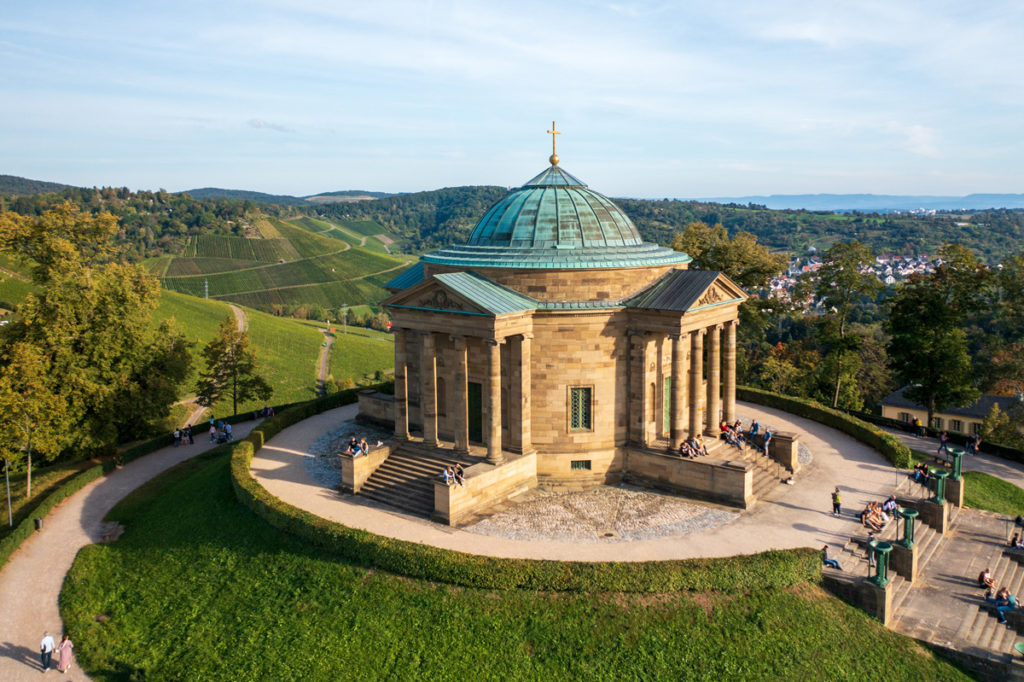
The Grabkapelle
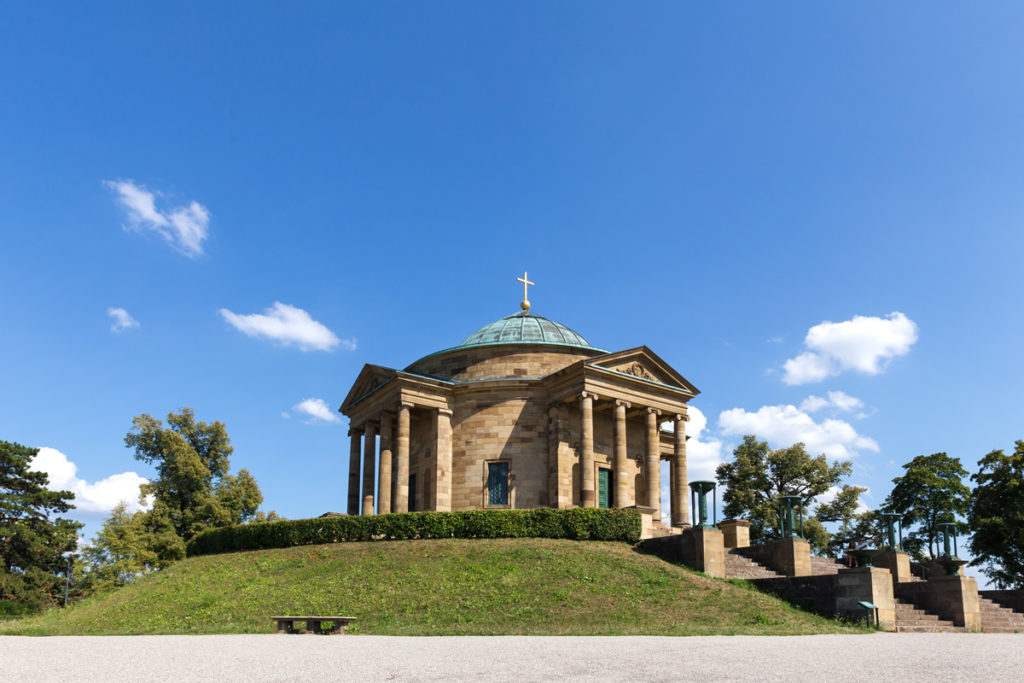
King Wilhelm I of Württemberg had it built in the 1820s as a tomb for his wife, Katharina Pavlovna, a Russian grand duchess who died young. “Love never ends” is carved over the entrance. Both are buried in the crypt. Inside it is plain and light-filled; the reason to come is as much the setting as the building — a full circle of view over the Neckar valley and the vines.
Wine on the hill
The slopes around the chapel are working vineyards, and Stuttgart is one of the few large cities in Germany that makes wine within its own boundary. A marked wine trail runs through here, linking the villages of Uhlbach, Rotenberg and Untertürkheim. Uhlbach has a small wine museum; in season, look for a Besen — a growers’ tavern that opens for a few weeks at a time, serving their own wine with simple food.
Good to know
- The Grabkapelle is usually open from around March to late November and closed in winter — check before going
- Nearest stop is Untertürkheim; from there it is an uphill walk through the vines, or a local bus part of the way
- The wine trail is signposted; the full Stuttgart route is long, but the Uhlbach–Rotenberg stretch is a good short piece
- Trollinger and Lemberger are the local reds; most growers also make a Riesling